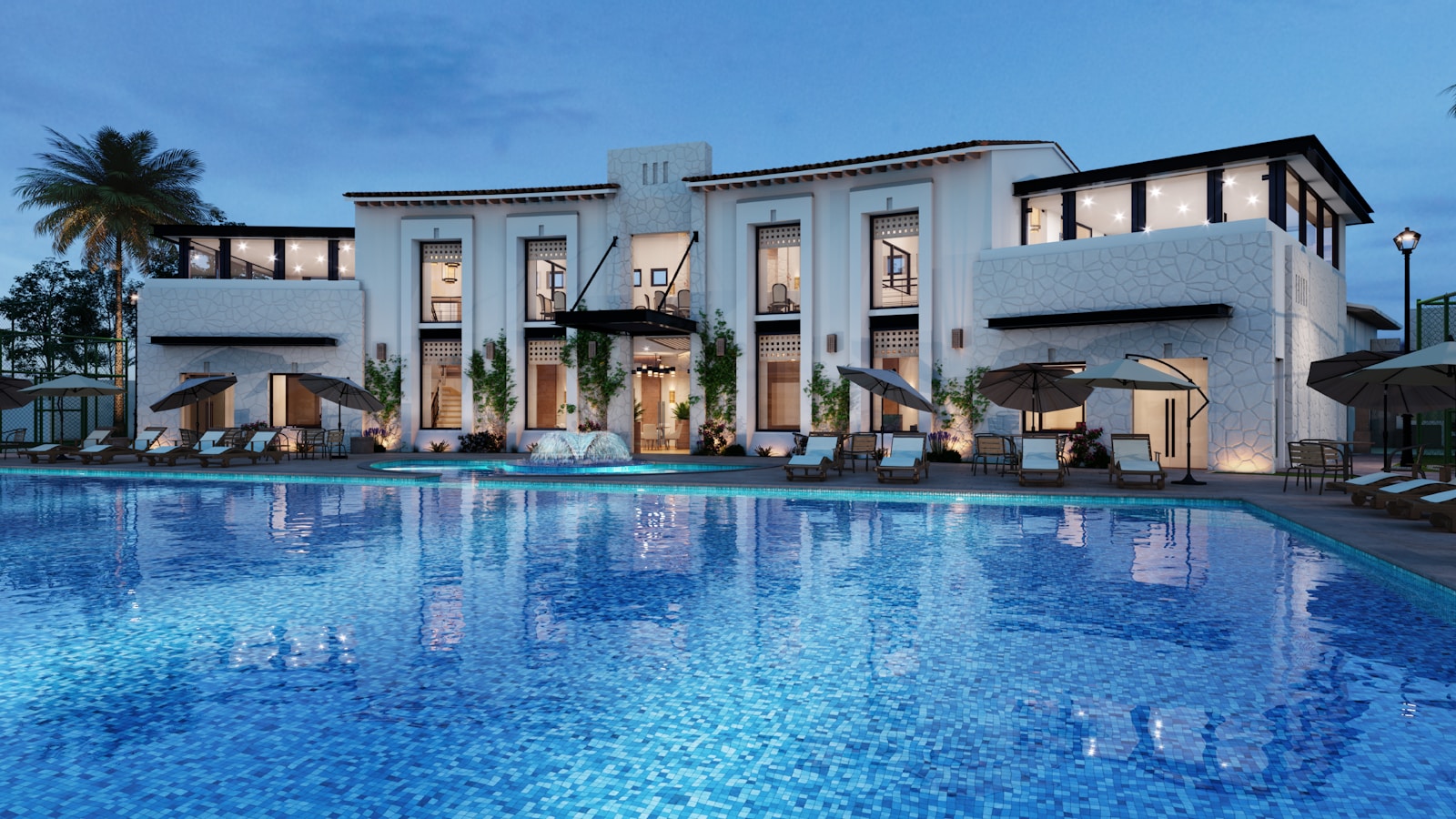
Picture, for a moment, your arrival at the right kind of small Italian hotel. The car pulls up in a small square or at the end of a gravel drive, and a young woman in a linen dress comes out before you have quite finished gathering your jacket from the back seat, smiling in the slightly amused way that staff who already know your name tend to smile. There is a bell somewhere, ringing for nothing in particular. The lobby, when you walk into it, turns out to be the kind of room that someone's grandmother might still be living in, with old books on a side table, fresh figs on a plate, a small dog sleeping on a Persian rug that has been quietly ageing into itself for sixty years. Someone takes your bag without making a thing of it. Someone else asks how you take your coffee, and remembers the answer for the rest of the week, even on the day when you forget to come down for it. By the second morning you are no longer a guest. You are someone who lives here briefly, which is the whole point of the boutique hotel, and the reason it has out-survived every chain that ever tried to copy it.
Italy does this better than any country in Europe, and the reason is partly historical. The luxury chains arrived late in Italy because the family-run alternative had always been strong, which means the contemporary Italian hotel landscape has more genuinely-small properties at the top end than anywhere else on the continent. Twelve of them, organised by region, follow.
How this list was curated
The criteria, applied honestly across all twelve.
Fewer than eighty rooms in nearly every case, because once a property gets bigger than that, the boutique register breaks and the staff can no longer learn your name in two days, which is the central promise of the format.
Owner-operated or family-owned where possible. The corporate boutique exists, and a handful of corporate boutiques do this beautifully, but the family-run hotel does it with a different texture, and the difference shows up in details that are difficult to articulate and impossible to miss.
Architectural integrity. A converted palazzo or convent or farmhouse with the bones intact, not a contemporary build pretending to be old, and not an old building stripped of its character to look fashionably new.
Service that does not require you to ask twice. This is the unmeasurable criterion that decides everything, and the one that separates the great hotels from the merely beautiful ones.
A breakfast that justifies the room rate on its own. Across all twelve properties, this rule holds, and it is one of the small joys of the Italian hotel that this rule can hold at any price point.
The list is organised by region rather than by ranking, because the right hotel for your trip is the one in the region you want to be in. The regional clusters also give you flexibility to combine two cities or a city and a countryside in a single seven-night trip, which is the sweet spot for an Italian holiday at this level.
The hotels, by region
1. The Amalfi Coast: Le Sirenuse, Positano
The institution. Family-owned since 1951, with the Sersale family still running it three generations later, and the green-and-white striped umbrellas that have signalled the spirit of Positano on a thousand magazine covers. The Champagne and Oyster Bar has hosted every American writer of the last fifty years, often the same ones returning for the same corner table, and the dining room overlooks the cliff in a way that briefly stops every conversation that walks into it for the first time. The art on the walls is the family's own. The pool faces the sea so directly that the line between the two of them gets confused at certain hours of the afternoon. Rates run twelve hundred euros and up in peak season, which sounds eye-watering until you stand on the terrace at dusk on the first evening and realise you are paying for something that almost no other hotel in the world can sell you.
Search Le Sirenuse rates on Booking.com for current availability, or see whether it appears in the Mr & Mrs Smith collection, where the small commission differences sometimes make a meaningful price difference for a multi-night stay.
2. The Amalfi Coast: Belmond Hotel Caruso, Ravello
The high-altitude alternative, and an increasingly popular one. An eleventh-century palazzo set on the Ravello cliff with the most photographed infinity pool in Italy, the kind of pool where you swim to the edge and the water seems to fall directly into the sea three hundred and fifty metres below. The gardens behind the hotel run into the gardens of Villa Cimbrone, so a morning stroll can wander into the Terrace of Infinity without any ticket required. What Caruso does that Sirenuse does not is offer altitude, the cooler Ravello air that makes an August stay genuinely tolerable when Positano is melting into its own pavement.
Find current rates and dates on Booking.com, or check the Mr & Mrs Smith listing for any partner-specific perks.
3. Tuscany: Il Pellicano, Porto Ercole
The Tuscan coast institution, designed in 1965 by an English aristocrat for his wife and held in the same architectural register ever since, with white-jacketed waiters and a private rocky cove and the kind of clientele that flies into Grosseto on small jets and disappears for two weeks every August. The dinner service is one of the last in Italy where the wine pairing is suggested rather than presented, the staff trusting that you might already know what you would like to drink with the sea bass, and the breakfast on the terrace looks out over a Mediterranean that turns from black to silver to blue in the half-hour you spend with the espresso. There is no Instagram studio. The clientele understands.
Il Pellicano on Booking.com for the dates and rates, or the Mr & Mrs Smith profile for the room descriptions and the inland sister property.
4. Tuscany: A small Chianti relais (multiple options)
Not one specific hotel but a category, because Tuscany has more good twelve-to-thirty room relais between Florence and Siena than any equivalent stretch of Europe, and the right one for your trip depends on which valley you want to wake up in. The format is consistent: a restored medieval estate, often a former monastery or fortified farm, set on a hill with a vineyard, an in-house restaurant, a pool with a view that turns out to matter more than you expected, and a twenty-minute drive to the nearest walkable town. Castello di Casole, a Belmond property, takes the format to its grandest expression. Borgo San Felice does it more quietly. Castello del Nero, on the Florence side of Chianti, is the design-forward newer entry. Each is a slightly different decade of the same idea.
The boutique Tuscany collection on Mr & Mrs Smith is the curated entry point for this category. For broader inventory, search Booking.com filtered for boutique properties in Chianti.
5. Florence: JK Place Firenze
The small palazzo hotel on Piazza Santa Maria Novella, with twenty rooms and the Michele Bonan interior that effectively defined the Italian boutique register for the last decade. The lobby is a sitting room rather than a reception desk, the bar is the kind of place locals walk into for an aperitivo without realising they are in a hotel, and the staff has the institutional memory to handle every difficult request before it has had time to become a problem. The breakfast room turns into a terrace in summer, where the walking-tour groups gathered on the piazza below provide a quiet kind of theatre while you eat.
JK Place on Booking.com, or via Mr & Mrs Smith, which sometimes includes breakfast or upgrades.
6. Florence: A small palazzo conversion (multiple options)
Florence has more good twelve-to-thirty-room palazzo hotels than any city of its size in Europe, and choosing between them is mostly a matter of which neighbourhood you want to be walking out of. Portrait Firenze, the Lungarno Collection's flagship, sits directly on the river with the Ponte Vecchio in the window. Hotel Lungarno, also Lungarno Collection, gives you the same view from a quieter address. Palazzo Vecchietti, near Piazza della Repubblica, is the kind of place where the rooms are individual apartments and the breakfast comes to your door if you ask. Each is a slightly different decade of design, but the same fundamental format: a converted noble residence with the bones intact, the proportions still right, and the doormen who somehow already know your evening plans.
The Mr & Mrs Smith Florence collection curates these together. Broader options on Booking.com by district.
7. Rome: A boutique near Piazza Navona or the Spanish Steps
The right Rome hotel is small, in the centro storico, and within walking distance of three things you actually want to see, which sounds obvious until you have stayed in the wrong part of Rome and spent half your week in taxis. Hotel de Russie is a Rocco Forte property, larger than a true boutique but still boutique in feel, with one of the most beautiful private gardens in central Rome where breakfast is served under wisteria from May through September. G-Rough is the design-forward smaller option behind Piazza Navona. Vilòn is the quieter alternative on Via dell'Arancio. JK Place Roma is the Roman cousin of the Florence property. The trade-off is always between size and service and design, and the honest answer is that you pick two.
Mr & Mrs Smith's Rome boutique hotels for the curated set. Booking.com's Rome boutique search for the wider field.
8. Venice: Aman Venice
The exception to almost every rule on this list. Twenty-four suites in a sixteenth-century palazzo on the Grand Canal, with frescoed ceilings restored over five years before the property opened in 2013, and a courtyard garden that is the only one of its kind in central Venice, a small private oasis where the city's sound dies the moment you step into it. The suites are large enough to be apartments, several of them with their own piano nobile and ceiling work that would belong in a museum if it were not still in use, and the staff has the European-grand-hotel training that Aman applies everywhere it operates. There is nothing else like it on the canal, and nothing else like it in Venice.
Aman Venice on Booking.com. Mr & Mrs Smith's profile carries it too, so check both before you book.
9. Venice: A small palazzo conversion (multiple options)
The Gritti Palace gets all the attention, but the better Venetian boutique stays are the eight-to-fifteen-room palazzo conversions tucked into Cannaregio or San Polo, away from the St Mark's Square crush. Ca' Maria Adele, in Dorsoduro near the Salute, is the design-driven small property of choice. Charming House DD.724, also in Dorsoduro, gives you a quieter water-view stay. Palazzo Venart, in Santa Croce, includes the only Michelin-starred restaurant inside a Venetian hotel. Each one anchors you to a real Venetian neighbourhood, which is the entire point of staying small here, since the morning walk to the bakery is half of what makes Venice still feel like Venice.
The Mr & Mrs Smith Venice collection skews toward the smaller properties. Booking.com has the broader inventory by sestiere.
10. Lake Como: Grand Hotel Tremezzo (and the small alternatives)
Lake Como's most famous hotel is large by boutique standards, around ninety rooms, and it is included on this list because nothing better exists at this scale on the lake, and because the Grand Hotel Tremezzo gets enough of the boutique register right (the family ownership, the floating water-on-water pool, the breakfast terrace facing Bellagio) to belong here in spirit. The smaller alternatives are worth knowing for travellers who want something genuinely intimate. Vista Lago di Como, a nineteen-room townhouse hotel that opened in the last three years, is the new entry of the moment. Filario, on the eastern shore in Lezzeno, has fifteen rooms in a converted boathouse and a swimming dock that drops you straight into the lake. Il Sereno, with its Patricia Urquiola interior, is the most architecturally serious of the three.
Grand Hotel Tremezzo on Booking.com. For the smaller alternatives, the Mr & Mrs Smith Lake Como collection is where they cluster.
11. Puglia: Borgo Egnazia, Savelletri di Fasano
The Itria Valley hotel that put Puglia on the international luxury map, and the only hotel on this list that is technically a village built from scratch in 2010 to look four hundred years old, an architectural conceit that should not work and somehow does completely. Walk into the central piazza after dark and it takes you about ten minutes to remember that none of this was here twenty years ago. The spa is exceptional, the golf is exceptional, the children's program is the best in southern Italy, and the rates (eight hundred to fifteen hundred euros and up in peak season) reflect all of it. The honest read: Borgo Egnazia is the answer for anyone who wants Puglia delivered as a finished, hotel-shaped product, with all the rough edges that make Puglia itself so good filed off into something easier to spend a week inside.
Borgo Egnazia on Booking.com, or Mr & Mrs Smith's profile for the experience packages.
12. Sicily: A small palazzo or villa hotel (multiple options)
No single Sicilian hotel anchors the way Borgo Egnazia anchors Puglia or Le Sirenuse anchors the Amalfi Coast, and that is part of what makes Sicily so interesting at the moment, because the category is growing faster here than anywhere else in Italy. Villa Igiea, the Rocco Forte property in Palermo, reopened in 2021 after a serious restoration and is now the cultural-stay option of choice on the island. Verdura Resort, on the south coast at Sciacca, is the larger sister property and the family-friendly option. Castello di Falconara, a trulli-meets-castle on the south coast, is the contrarian pick, all medieval bones and minimal modernist intervention. Each one represents a different argument about what Sicily as a hotel destination wants to be.
The Mr & Mrs Smith Sicily collection is the cleanest entry point. For broader options, search Booking.com filtered to Sicily and filter by which half of the island you want to wake up on.
How to actually book
Book direct first. Most boutique hotels in Italy have direct booking that matches the OTA rate, and direct usually unlocks the better rooms before they reach the search engines.
Use Mr & Mrs Smith for member perks. Free breakfast, late checkout, and credits of fifty to two hundred dollars are standard with their bookings, and on a five-night stay those perks add up to real money.
Use Booking.com or Tablet for comparison shopping even when you intend to book direct in the end. The OTAs surface availability faster than calling, and you can confirm dates before you commit.
Prioritise the room over the rate. A six-hundred-euro room with a courtyard view at the same hotel is worth more than the four-hundred-and-fifty-euro room facing the back, and on a short stay you will remember the room and forget the rate. Splurge on the room.
The booking lead time question. Italy's boutique hotels book four to nine months ahead for May through September, and inside sixty days you are choosing among the leftovers. Start your search now if you are thinking about this summer.
The single most useful tool for shortlisting boutique properties across Italy is Mr & Mrs Smith's filter system. Their curation overlaps heavily with the list above, and the member-rate bookings include perks that genuinely matter for a five-night stay.
Practical notes
Combinations. The best Italian trips combine two of these in one week: Florence with the Tuscan countryside, Rome with the Amalfi Coast, Venice with Lake Como, Palermo with Verdura. Two hotels in seven nights is the sweet spot, and three hotels in seven nights is one too many.
Booking insurance. Italian boutique hotels often have stricter cancellation policies than chain hotels, with thirty-to-sixty-day non-refundable windows being common.
SafetyWing's policies are the simplest option for short luxury trips, and the cancel-for-any-reason add-on is worth its premium on multi-thousand-dollar bookings.
Solo travellers. Most of these hotels accommodate solo guests well, although a few of the smaller Florence and Venice palazzi feel happiest with couples or small parties, simply because the public spaces are small and intimate by design.
Children. Italy is more child-friendly at the high end than the marketing suggests. Borgo Egnazia, Verdura, Il Pellicano, and Castello di Casole all have proper children's programs that take the children seriously rather than parking them. Le Sirenuse and Aman Venice are not the right call for younger children.
The shoulder month myth. September is now as busy as July at most of these properties, which means the genuine shoulders are late October and early May, and those are the months when these hotels become slightly less impossible to book.
What I'd actually pick
If forced to pick one for a first Italian trip with a partner, the answer is JK Place Firenze for three nights and a small Chianti relais for four. The reason is the combination, which gives you the city for the museums and the countryside for the rest.
The argument for JK Place over its peers is the staff, who treat the hotel as a sitting room you happen to be staying in, and the fact that the Florence neighbourhood (around Santa Maria Novella) is walkable to almost everything you would want to walk to. Three nights is exactly enough Florence for a first trip; four nights starts to outstay the city, and five nights starts to rush the countryside.
The Chianti relais is the second movement. After three nights of museums and dinner reservations, the move out to a vineyard hotel is the kind of transition that a single Italian week cannot quite recover from if you skip it. Castello di Casole is the most luxurious answer; Borgo San Felice is the most graceful; Castello del Nero is the most design-forward. Pick by which valley you want to wake up in.
The surprise pick, the one most readers will not have considered, is Filario on Lake Como. Fifteen rooms, a swimming dock, the eastern shore that almost nobody stays on, and the kind of dinner service that happens entirely on a terrace over the water. It is the answer for travellers who want Como without the famous-hotel performance, and it is quietly the most romantic small hotel in northern Italy.
The Italian boutique hotel is a seventy-year tradition, refined every decade, and now in its strongest form. The chains will not catch up because the chains cannot replicate what these properties do, which is to be specific, and to be specific in a way that comes from having one owner rather than a brand standard. Pick by region first, by hotel second, and trust the small Italian hotel to do the rest of the work, the way Italian small hotels have always done it.
The route.style travel notebook
Our running list of the villas, hotels, and small experiences worth booking, organized by destination. PDF, monthly update.
Get the notebook →