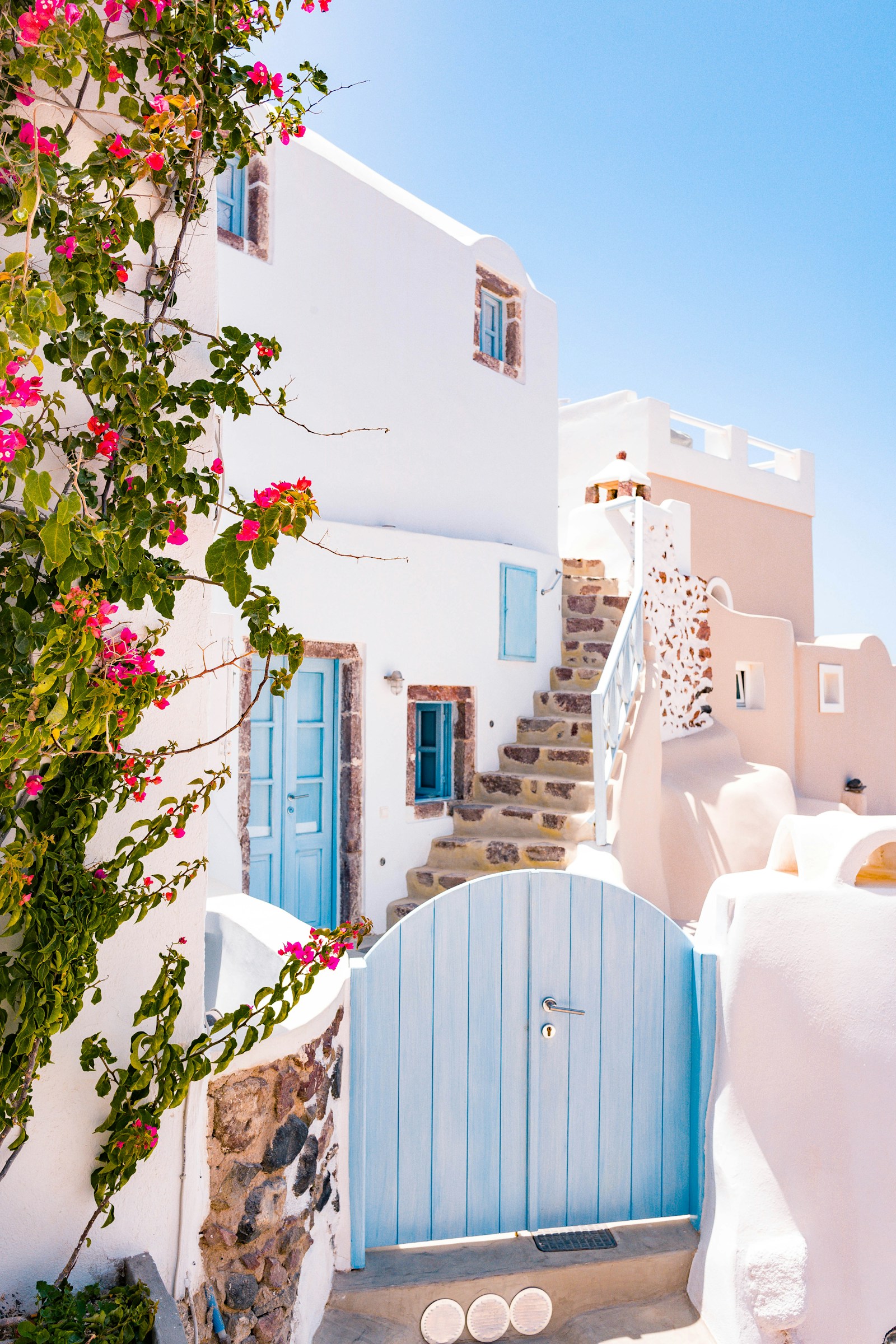
Picture, for a moment, a Positano staircase at five in the afternoon. The cliff falls away on your left in a confident vertical drop, the dome of Santa Maria Assunta is framed for a few seconds between two ochre walls, and a small grey cat watches you climb from a windowsill three flights up, with an air of having seen this exact scene every day for a decade. Bougainvillea spills over a wrought-iron balcony above your head. A motor scooter passes you somewhere overhead, then disappears into a tunnel cut into the rock. The smell of someone cooking with garlic and sea bass has been following you for the last twenty steps and is now starting to feel like a personal invitation. You have already chosen Positano, which is why you are here, and the rest of this article is going to do its quiet work on the next decision: which part.
If you are still weighing Positano against Praiano or Ravello, the broader Amalfi Coast guide is the right place to start. If you have already decided that Positano is the answer, this article is the next step, written for travellers who know that the wrong neighbourhood inside the town is a different trip from the right one, and who would rather make that call now than discover it on a 220-step staircase at one in the afternoon.
The quick answer
Read the four lines below and notice which one your eye returns to.
- Choose upper Positano if you want the iconic view and you are ready to commit to a daily climb.
- Choose the Spiaggia Grande side if you want central, walkable, and beach-adjacent, with the most dining options inside a five-minute walk.
- Choose Fornillo if you want the quieter, smaller, more local Positano, with the same town walk available whenever you want it.
- Choose the Praiano border (Laurito, Arienzo) if you want sea access without the upper-town climb, and a more contemporary register of villa.
- The honest tiebreaker: for most travellers on a first Positano trip, the Spiaggia Grande side is the right answer six times out of ten. The view from the upper villas is non-negotiable for the seven-times-out-of-ten reader for whom the photograph itself was the point of the trip.
You will already be leaning toward one of those four. Hold that lean. The next four sections will either confirm it or quietly redirect you.
The four Positano neighborhoods
Upper Positano (Via Pasitea and above)
Via Pasitea is the upper road, climbing in long lazy switchbacks from the centre of town toward the Praiano border, and the villas along it sit between fifty and two hundred metres above the beach with the dome of Santa Maria Assunta framed below and the cliffs spreading out on either side. This is the geography that produces the famous photograph, and the geography that, on the right evening in June with the lights coming on across the bay, can briefly stop a conversation at the dinner table because nobody quite knows what to say in the face of the view they paid to be inside. The trade-off, and you will feel it on the second afternoon, is the climb. Every trip down to the beach, every dinner reservation, every taxi pickup involves a serious return ascent on the way back, and two hundred steps is common, three hundred and fifty is not unusual. In May or June or late September, the climb is bearable and even pleasant, the kind of small daily exercise that justifies the second helping of pasta. In July or August, between two and six in the afternoon, with the stones holding the heat like a wood stove, the climb is genuinely punishing and changes how you plan the day.
The villa stock here skews larger. Five-bedroom and bigger is the norm, partly because the upper road has the buildable plots and partly because the price of a postcard view at this scale supports a bigger property. Pools are common. Private gardens are common. Full-staff arrangements, with a daily housekeeper and a chef on call, are common. The format favours groups and extended families, and the upper-town villa with eight or ten people in it is the version of Positano that most travellers come back from talking about for the rest of the year.
Plum Guide's Positano collection leans heavily toward the upper-town inventory and is the cleanest curated entry point, with every property visited in person, which matters here because the photographs cannot tell you the truth about the steps. For broader options, search Booking.com's Positano villa filter and filter by sea-view properties on Via Pasitea.
Spiaggia Grande side
The central beach and the streets immediately behind it are the version of Positano that almost nobody photographs and almost everyone enjoys most after the second day. Villas here sit lower on the cliff, often within eighty to one hundred and fifty vertical metres of the beach, with steps either directly to the sand or a short walk through the town's working centre, and the daily logistics are dramatically easier than the upper-town equivalent. The view from the property is into the cliffs and across the bay rather than out over the postcard, which is the small editorial trade you make for a trip where dinner does not need to be a logistical operation.
The texture of staying here is different from the upper town in ways the photographs do not show. You wake to the sound of the harbour rather than the silence of altitude. The bougainvillea is closer, the small alleys feel more like home by day three, and the morning espresso happens at the same bar where the local fishermen are also having theirs because everybody is at the same level of the cliff. The villa stock favours four bedrooms or smaller, since the lots are tighter than the upper town, and a small number of six-bedroom-and-larger options exist for groups who refuse to choose between the central rhythm and the bigger party.
Best for families with younger children, for travellers who want to swim from the property, and for anyone who has done the Positano upper-town climb on a previous trip and decided once was enough.
Fornillo
Fornillo is the small western beach, fifteen minutes' walk from Spiaggia Grande along a wooden boardwalk that is one of the small unsung pleasures of any Positano trip, the path cut into the cliff with the sea two hundred metres below on one side and the geraniums spilling out of a hundred small balconies on the other. The villas here climb a less developed slope, with smaller properties, more local rhythm, and a beach that fills less than half as quickly as Spiaggia Grande in the height of August. You are still in Positano when you stay here, with the same walk into the centre for dinner and the same harbour just around the cliff, but the daily default is quieter, and the residential streets feel slightly less curated, which is to say slightly more lived-in. The late afternoon light at Fornillo is meaningfully better than at Spiaggia Grande, since the western exposure catches the sun for an extra half-hour as it goes behind the headland, and photographers who know the coast often prefer this beach for the last hour of the day.
The villa stock leans two to four bedrooms, often older properties with traditional ceramic tile and the kind of terrace that has been in the same family for two generations of summer rentals. Best for couples and small families who have been to Positano before, for travellers who care more about the local register than the postcard, and for anyone who values the small daily relief of not arriving at a packed beach at eleven in the morning.
Booking.com's Fornillo search catches the smaller family-owned properties that have not yet reached the curated platforms. Plum Guide's Positano inventory occasionally extends to Fornillo, but the curated collection is denser closer to the centre.
The Praiano border (Laurito, Arienzo)
The eastern fringe of Positano, where the road climbs toward Praiano, is the contemporary register of the coast and the answer for travellers who do not need the traditional ceramic-tile look to feel they are in the right place. Laurito is the small bay reached only by stairs or boat, and Arienzo is the next cove east, similarly accessible by three hundred steps from the road or, more sensibly, by water. The villas here lean modern, often built in the last twenty years on the upper road, with infinity pools that face directly into the open Mediterranean rather than across the bay toward Capri. You are not quite in Positano any more by the rhythms of the town: the centre is a ten-minute drive or a twenty-five minute walk, dinner reservations involve a small bit of logistics, and the morning espresso happens in your own kitchen rather than on the harbour. In exchange, you get the best swimming access on this whole stretch of coast, since the small-cove geography means the water is cleaner, the boat traffic lighter, and the daily descent is to your own private cove rather than to a shared beach.
The villa stock is modern and sleek, often smaller than the upper-town equivalents, and the category is growing fastest of any in greater Positano. Best for design-driven travellers who actively do not want the traditional register, for returning Positano visitors who are deliberately looking for a different version of the coast, and for couples on a milestone trip where the morning swim from a private cove is worth the small evening logistics.
Plum Guide's curated set includes most of the strong properties on the Praiano border. For the contemporary villas in particular, Mr & Mrs Smith's Amalfi Coast collection sometimes carries listings the broader OTAs do not.
How to actually book
Booking lead time. Top Positano villas book eight to twelve months ahead for July and August, four to six months ahead for the genuine shoulders of late May, early June, and late September. Inside sixty days, you are choosing among the leftovers, and the leftovers in Positano specifically tend to be the upper-upper-town properties with the highest step counts, which is the last shape of disappointment you want on a five-figure booking. Start your search now if you are thinking about this summer.
The step count question. Every Positano villa listing tells you something about the steps, but the something is rarely the truth. Confirm the count from the road to the front door, from the front door to the pool, and from the front door to the nearest beach before you book. A villa with eighty steps is a different proposition from one with two hundred and twenty, and the difference between those two is the trip you actually have. The honest hosts will tell you the real number; the less honest will tell you what they think you want to hear, and you will know which is which by how long they take to answer.
The boat option. About a third of Positano villas have a relationship with a local skipper for daily boat rentals, and the relationship is the kind of detail that quietly defines the week. Before booking, ask whether the villa includes or arranges boat access, whether the skipper has favourite coves, and whether the morning Capri run is part of what they offer. The right boat skipper turns Positano from a town stay into a coast stay.
For the broader Amalfi Coast comparison, including Praiano and Ravello and the smaller villages between them, the Amalfi Coast pillar guide covers the full regional picture.
When to go
Positano follows the broader Amalfi Coast pattern, with the small caveat that seasonality matters more here than elsewhere on the coast because the verticality changes how the heat lands. Late May into early June is the calmest window: the bougainvillea is at peak, the temperatures are warm without being punishing, and the daily climb is bearable. September into early October repeats the trick from the other side, with warmer water and softer light. July and August are crowded and hot enough that the steps become the central factor in the daily plan, which is why the upper-town villas are best avoided in those weeks unless you are explicitly committed to the morning ascent. November through March, much of Positano closes for winter.
Practical notes
Driving. Do not. The road into Positano is famous for a reason, and that reason is not a good reason. Park at the villa, use boats and taxis, and use Naples airport with a transfer arranged by the villa.
Boat days. Charter through the villa where possible. The local skippers in Positano know the coves, the lunch stops at La Fontelina on Capri, and how to time the morning boat run to avoid the cruise crowds.
The food question. Positano restaurants split into three categories: the institutions (La Sponda at Le Sirenuse, Chez Black on the beach), the locals' choices (Ristorante Max, La Cambusa), and the trap restaurants near the central staircase, which you will recognise by their menus printed in five languages. Your villa host knows which is which, and asking is the move.
Insurance. A Positano villa rental is a meaningful financial commitment, often with a strict sixty-day cancellation policy, which means most travellers should look at trip insurance for any week with non-refundable lodging.
SafetyWing is the simplest option for short luxury trips, and the cancel-for-any-reason add-on is worth its premium on a five-figure booking.
What I'd actually pick
For a first Positano trip with a partner, the answer is a Spiaggia Grande side villa, four bedrooms, with steps to the beach, for five nights. The reasoning is the rhythm. A first Positano trip wants to be inside the town's daily texture, with the harbour in the morning and the bougainvillea on the walk to dinner and the lemon granita from the same place every afternoon, and the central villa makes that rhythm easy in a way the upper town never quite manages. Five nights is right because Positano is small, and a longer stay starts to feel like you have walked the same staircase three times in the same morning.
For a return trip, particularly one with extended family, the upper-town six-bedroom is the answer. By then you know the staircase. By then the view is the point, since you have already done the central rhythm and want the photograph itself for the second visit. The chef-on-call setup pays for itself in the second-night dinner alone.
The contrarian pick, the property most readers will not have considered, is a smaller two-bedroom in Fornillo, with a terrace facing the smaller western beach and an evening light that the central villas cannot match. It is the version of Positano almost nobody talks about, and quietly the answer for couples who have done the famous towns and now want to come back to one of them properly.
Positano is small, vertical, and one of the few places left where the postcard view actually delivers when you stand under it. The right villa here is the difference between the trip and the trip you already half-imagined. Choose your neighbourhood first, your villa second, and let the town do the rest of the work the way Positano has always done. For the broader picture across the coast, including the villages most first-time visitors do not consider, the Amalfi Coast guide is the next read.
The route.style travel notebook
Our running list of the villas, hotels, and small experiences worth booking, organized by destination. PDF, monthly update.
Get the notebook →