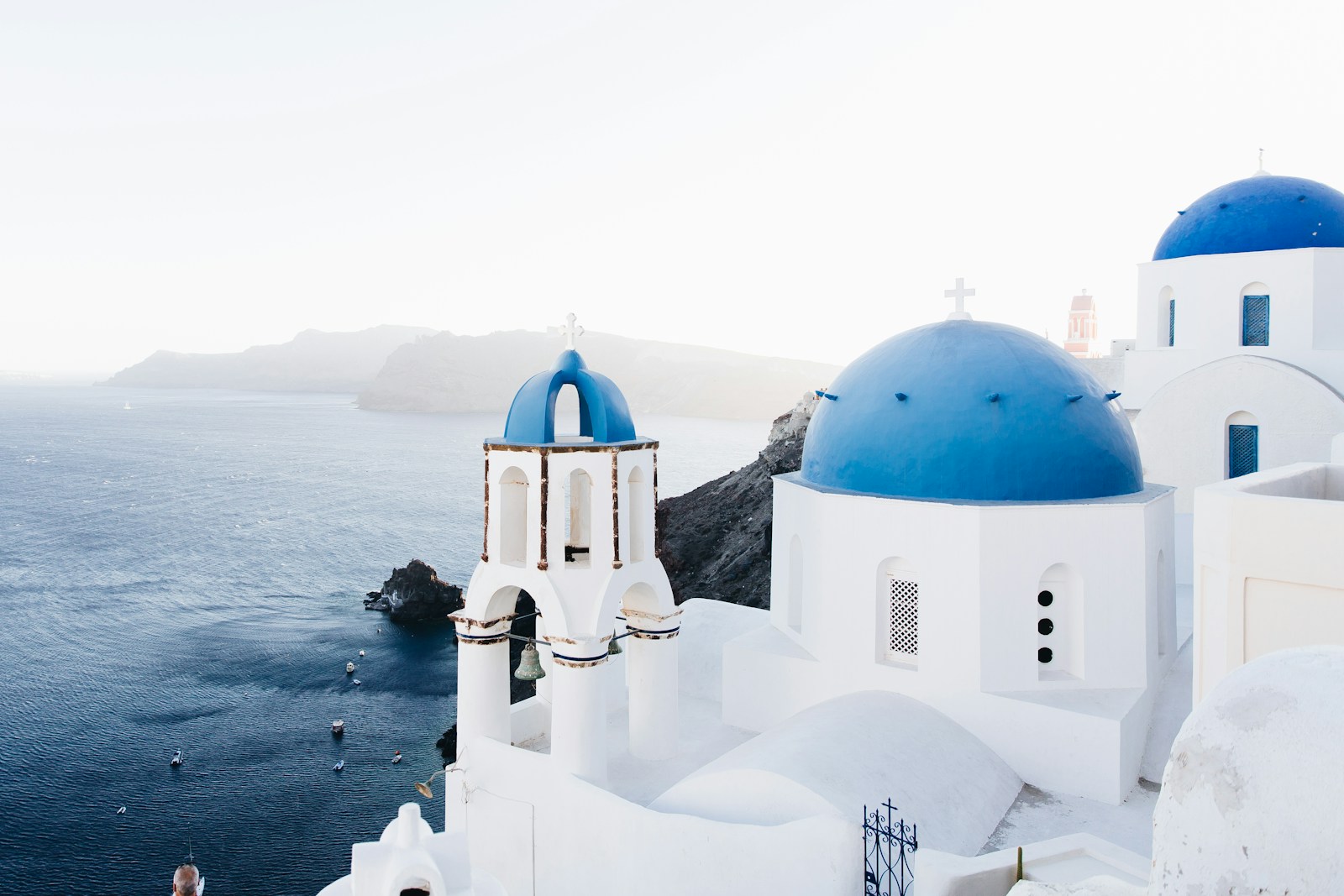
Picture, for a moment, your first morning on Lake Como. You step onto a stone terrace barefoot, the marble still cool from the night, and the lake below has that glassy stillness that only lasts about thirty minutes after sunrise, which is part of why people come here, even if they could not put it into words. A church bell begins somewhere across the water, slow and unhurried, and is answered a moment later by another from further along the shore. The mountains hold the lake the way a coat thrown over a chair holds its shape. A ferry horn lifts from the south, and you realise the day has begun without asking your permission, and that this turns out to be a relief.
Now picture your first morning in Tuscany. You wake to the smell of woodsmoke from a kitchen that has been working since five, threaded through with rosemary and the clean sweetness of an espresso machine warming up downstairs. The shutters open onto a long valley, the cypresses lining the road below like a quiet procession, the haze just beginning to lift off the vines. Breakfast happens on a wooden table outside, where the bread is still warm because it came down the hill twenty minutes ago, and you can feel the entire day stretching out ahead of you with no fixed obligation, only a rough sense that lunch will probably happen somewhere with a view.
Both mornings are real, and both are waiting for you. The question this article will answer, gently and over the next two thousand words, is which one is yours.
The quick answer
Read the three lines below and notice which one you find yourself nodding at, because that small involuntary movement is usually the truth.
- Choose Lake Como if you are travelling as a couple, you crave drama and water, and you want the kind of week where one breathtaking view does most of the heavy lifting for you.
- Choose Tuscany if you are travelling with family or friends, you want a base from which to drift out toward towns and vineyards, and you would rather collect a string of unrepeatable days than relive a single perfect afternoon.
- The honest tiebreaker: Como rewards a five-night stay better than a ten-night one, and Tuscany rewards the opposite, so if your trip runs longer than a week, the answer is almost always Tuscany.
You felt the pull on one of those, didn't you. Hold onto it. Everything that follows will either confirm what you already knew or gently complicate it in a way that makes the choice feel obvious by the end.
The case for Lake Como
What it actually feels like
The first thing you notice, once the suitcases are inside and you have a glass of something cold in your hand, is the verticality. Como is not a place you walk across so much as up and down, and within an hour of arriving you find yourself thinking the way locals do, which is in elevation rather than distance. The houses stack themselves up the slope as though gravity were a polite suggestion, the gardens terrace gracefully toward the water, and the boats become the easiest way to get anywhere worth going. A particular rhythm grows out of all this, and you feel it on the second morning. The lake does that dawn thing where it shows you the mountains twice. Late morning brings the church bells, the espresso machines, the soft hiss of ferries arriving and leaving. Afternoons belong to the gardens at Villa del Balbianello, the lemon trees in their old terracotta pots, the lacquered Riva boats that look more like sculpture than transport, polished by their owners with the kind of slow love that comes from owning a thing for thirty years and not being in a hurry to replace it. Evenings collect on terraces, the conversations growing longer, and the light leaves the water last of all. There is something polished and composed about it, slightly theatrical in a way that makes you sit up a little straighter at dinner without quite knowing why.
The scale only registers when you stand on a ferry deck and look up. Como is a small lake by Italian standards but a deep one, more than four hundred metres at its lowest, and that depth gives it the feel of a fjord rather than a body of water. The mountains do not roll away from the lake the way they would in a watercolour; they fall into it with conviction. No photograph quite prepares you for that angle, which is part of the reason the place keeps surprising people who thought they already knew what it looked like.
Where to actually stay
The lake is shaped like an upside-down Y, and three areas do most of the work for visitors. One of them, in the next minute or two, is going to start fitting you better than the others.
Bellagio is the postcard, sitting at the apex where the two southern arms meet, with cobbled streets, gardens that climb into the hills behind, and the best central views you can find without a boat. If this is your first trip to Como, this is where you start, and there is no shame in it; everyone starts here.
Tremezzo and Lenno, on the western shore, belong to the great gardens, the boat-access restaurants, and the legendary Grand Hotel Tremezzo. If you want the highest concentration of villa stock and the daily gift of watching the sun come over Bellagio across the water, this is your shore.
Varenna, on the eastern shore, is the quiet one. A working train station means you can skip Como city entirely and arrive from Milan in just over an hour, which already starts the trip on the right foot. If you want the gentlest mornings on the lake and the smallest crowds, you want Varenna.
Once you have a sense of which shore fits you, Plum Guide's Lake Como collection is the most reliable starting point. Every property has been visited in person, which matters on a lake where photos can flatter a property that turns out to be a steep climb up from the water, and you save yourself the small heartbreak of arriving at the wrong house.
If you would rather scan availability across hotels and villas in a single view, search Booking.com and filter for the western shore. That is where the views and the gardens are, and that is almost certainly where you want to look first.
When to go
Mid-May into early June is the calmest window. The wisteria is still going, the lake is full from snowmelt and looking its bluest, the restaurants are open without being booked out, and the crowds have not yet found their rhythm. September into early October repeats the trick from the other side, with warmer water and softer light, and a slow drift of late-summer pleasure that quietly turns into the most flattering month of the year. July and August are hotter and busier and full of energy if that is what you came for, though the descent down two hundred steps to your favourite restaurant in August will test your sandals. November through March, much of the lake closes for winter, with many of the best villas shutting their doors and a meaningful number of restaurants following them. Spring rain is real, and autumn fog can erase the view for whole mornings before lifting in twenty minutes and leaving you stunned all over again.
The case for Tuscany
What it actually feels like
Tuscany is horizontal where Como is vertical, and once you have spent a few days here you start to feel that the difference goes deeper than geometry. The light is warmer and more diffuse, and it carries the day differently. You drive between things, stopping for a coffee in a town you had not planned to visit, and the cypress alleys appear on schedule, just as you needed them. Wild fennel scents the air in summer, and dust if you go in August. The cooking shifts noticeably as you cross the region, which is part of the pleasure of being here long enough to notice. Chianti gives you bistecca and pici. The Maremma gives you wild boar and sea fish, often on the same plate. The Garfagnana gives you chestnut flour and dark, sour breads that taste like a colder country. "Tuscany" is roughly the size of Massachusetts, and your trip is shaped almost entirely by which sub-region you choose, which is the small but consequential decision this article exists to help you make.
You feel the difference most clearly in how time behaves. A morning trip to a market town becomes a long lunch in a courtyard you found by accident. A planned visit to a vineyard becomes an unplanned dinner with the family that owns it, the children running through the rows in the dusk while the grandfather opens a bottle that was not on the tasting list. The pace is slower than at Como because the geography invites you to wander, and the villas reflect this. They are bases, not destinations, and the destination is the next valley over, and the one after that, and the small chapel you pass on the road at sunset and decide to come back to tomorrow.
Where to actually stay
Four candidates are worth your week. Read the descriptions and notice which one starts forming a picture in your head, because that picture is usually right.
Chianti, between Florence and Siena, is the most scenic at first glance, with its vineyards, hill towns, and easy access to both cities. Most first-timers come here, and they are not making a mistake.
Val d'Orcia, south of Siena, is the iconic landscape: the cypress on the hill, the wheat fields turning gold in June, Pienza and Montalcino and Montepulciano stacked on their hilltops within easy drives of one another. Quieter than Chianti and more rewarding for a return visit.
The Maremma, the Tuscan coast and inland, is the contrarian choice. Less famous, less crowded, with stronger food, beaches you can drive to in twenty minutes, and a wilder countryside that feels closer to Tuscany as it was thirty years ago.
Lucca and the Garfagnana, the northwest, give you olive country, walled towns, and the Apuan Alps holding the horizon. The most underrated quadrant of the region, and the one most likely to surprise you if you have been to Tuscany before.
Once a sub-region clicks for you, Plum Guide's Tuscany properties lean toward restored farmhouses with pools, which is what most readers actually want once they think about it for thirty seconds. For more variety, including agriturismo-style stays and smaller stone houses tucked into the hills, search villa rentals on Booking.com and filter by your sub-region. The property that fits the picture in your head is somewhere on one of those two pages, and you will know it when you see it.
When to go
May, June, late September, and October are the windows you want. July is hot. August is hotter, dustier, and full of returning Italians, which is its own kind of pleasure if you know what you are walking into. The Palio di Siena, on July 2 and August 16, is worth planning a trip around if you have any tolerance for crowds and any taste for the deep, slightly alarming joy of an Italian town letting itself off the leash. The olive harvest in November is one of the most private pleasures in European travel, but be aware that many things close. Wisteria peaks in late April, just before the weather warms enough to swim. The light in late September is the kind of light photographers get up early for, and you will too.
Side by side
Here are the comparisons that matter, condensed into a list you can scan, and you will probably find one column quietly winning more of them than the other.
For couples: Lake Como wins for romance. The water and the verticality conspire.
For families with children: Tuscany. Pools, space, fewer steep drops, more places to walk to.
For groups of friends: Tuscany again. Larger villas exist there at the same price point. A Como villa for eight is a small fortune.
For first-time Italy visitors: Lake Como. It is more compact and easier to do well in five days.
For repeat Italy visitors: Tuscany. Endless layers, and you will not finish it on this trip.
For honeymoons: Lake Como, narrowly. The drama works for the once-in-a-lifetime register.
For longer stays of ten days or more: Tuscany. The variety sustains, while Como can feel small after a week.
For food obsessives: Tuscany, by a meaningful margin.
For the photogenic trip: Lake Como. Every angle is the angle.
For the slow-living trip: Tuscany.
Cost at the top end: roughly comparable. Cost at the mid-range: Tuscany is materially cheaper.
If one column kept winning, that is your answer, and you can probably stop reading. If the columns split, the next section is for you.
What I'd actually pick
If you forced me to choose for the kind of reader who has travelled enough to know what they like, the pick is Tuscany seven times out of ten, and I think you can already feel why.
A villa holiday at this level is, before anything else, a setup cost. You fly, you arrange transfers, you stock the kitchen, you settle in over the course of a long, slightly disorientated first day, and that setup is worth more days, not fewer. Tuscany rewards the longer stay because each day can be a different sub-region, a different kitchen, a different drive, while Como is a single set, beautifully dressed and brilliantly lit, and after five days you have seen the play. The lake is not less beautiful for this. It is just smaller, and smaller things are best enjoyed in shorter visits.
The other reason is what happens at the kitchen. A Tuscan villa with a cook is one of the great experiences in European travel, and you can find dozens of them at every price point, the kind of dinner that ends up in your memory the way a wedding does. The same setup at Como exists, but the menu is more constrained, the markets are smaller, and the cooks have less to work with locally. Food matters on a long trip, and on the long trip, food matters more than view.
The three out of ten when Como wins are easy to name. A honeymoon. A milestone anniversary. A short trip squeezed into a longer European route. A reader who has been to Tuscany three times and wants water this year. In those cases, Como is the right call without question, and you will not regret it for a second.
A few practical notes
Driving. A car is essential in Tuscany, and a liability at Como, where the roads are narrow, parking is hopeless, and the boat is faster between most towns. For Como, fly into Milan Malpensa and arrange a transfer to your villa. For Tuscany, fly into Florence or Pisa and rent.
The shoulder myth. Shoulder season in Italy now means late April to early June, and most of September. Late September to mid-October is the genuine sweet spot for both regions, with weather still warm, prices about thirty percent below July, restaurants still open, and locals less harassed.
Booking lead time. Top villas in both regions book eight to twelve months ahead for July and August, four to six months ahead for the shoulders. Plum Guide and Mr & Mrs Smith hold the strongest inventory in both regions, while Booking.com aggregates more broadly, including the properties the curators decline. If you are thinking about this summer, start your search now; the best inventory tends to be gone within weeks.
Insurance. A villa is a meaningful financial commitment, and most travellers should look at travel insurance for any week with non-refundable lodging. SafetyWing is the simplest option for short luxury trips.
The honest truth about Lake Como and Tuscany is that both of them are right answers, depending on who is asking, and the only real mistake is to choose by reputation. Choose by how you want to spend the days, which means going back to the very start of this article and remembering which morning pulled you in: the terrace and the bells, or the woodsmoke and the cypresses. That is your answer. The villa, in either case, is just where the days happen, and the days, once you let them, will do the rest of the work.
The route.style travel notebook
Our running list of the villas, hotels, and small experiences worth booking, organized by destination. PDF, monthly update.
Get the notebook →