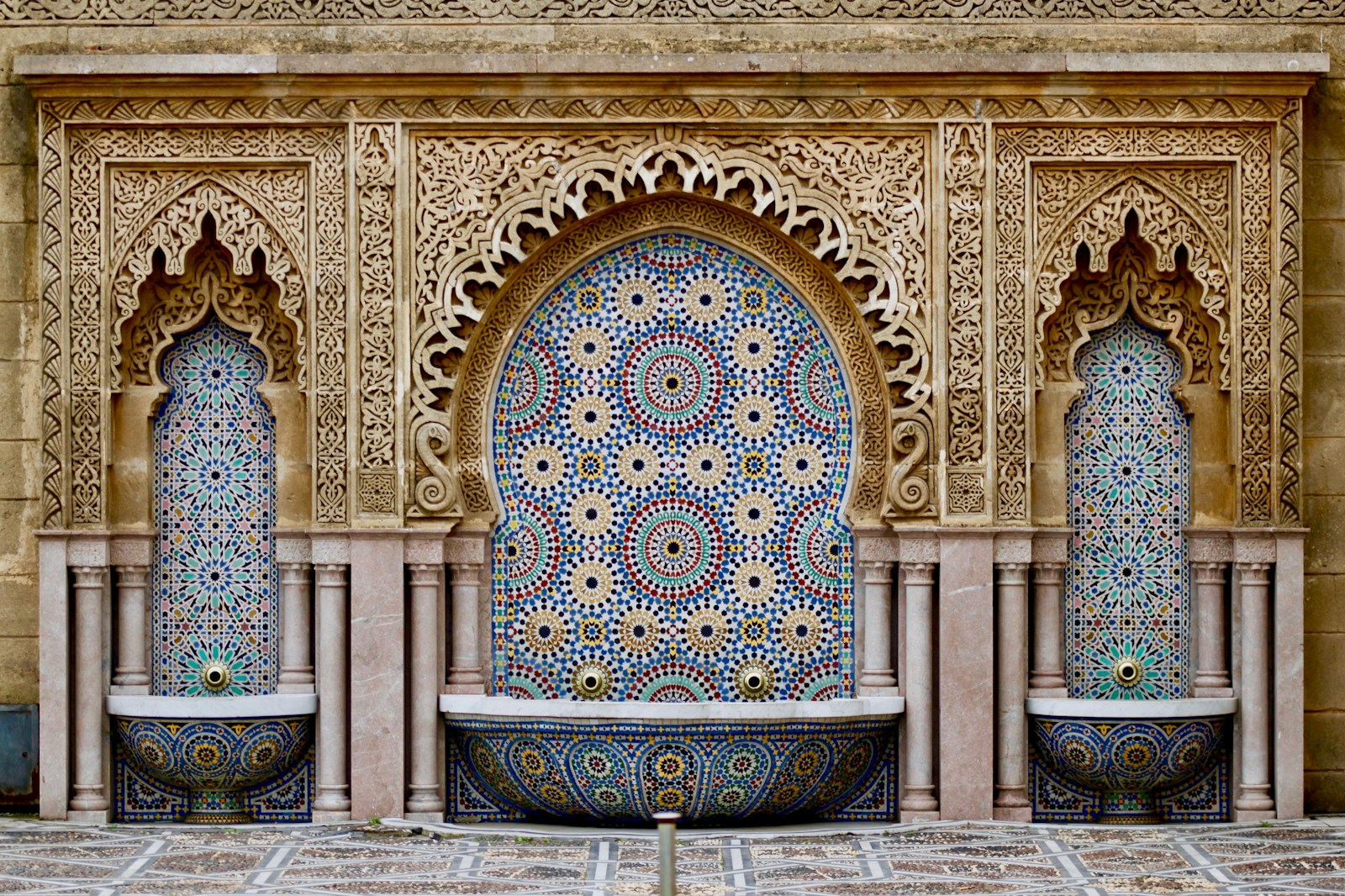
Picture, for a moment, your arrival at the right riad after a first walk through the medina. You have come from the airport in a small car that could not quite reach the door, then on foot for the last two minutes through a lane only just wide enough for one person and a porter pulling your bag, the noise of motorbikes and shopkeepers and the call of the muezzin layered into a single warm wall of sound around you. The riad's door is plain, almost shy, set into a rust-coloured wall that gives nothing away. Your host opens it from the inside as if she had been listening for your footsteps, smiles, and steps back without ceremony to let you in. The door closes behind you. The street goes quiet so completely that for a moment you think you have lost your hearing. There is a courtyard with a square of still water in the centre, an orange tree dropping its small white blossoms onto the tile, a carved wooden door across the courtyard that is older than your grandparents, and the sound of a single small fountain settling into itself. You can hear pigeons walking on the roof. You can hear yourself thinking. This is the riad as architecture, the whole eight-hundred-year argument about how to live in a hot, busy city, and it works on you within thirty seconds of stepping over the threshold.
This article is about how to pick the right one. Marrakech has more riads than anywhere in the world, several hundred operating as small hotels at any given time, and the difference between a great Marrakech week and a frustrating one is mostly which riad you book and which neighbourhood you book it in. Here is the honest read.
What a riad actually is
A riad is a traditional Moroccan house built around an interior courtyard, with all the rooms opening inward and the exterior wall presenting only a door to the street. The architectural point is privacy and climate control. The medina is dense and loud, with the slap of motorbike engines and the calls of vendors carrying for blocks, while the riad is the calm, cool centre of a separate world built specifically to keep the heat and the noise outside. A "luxury riad" today usually means six to fifteen rooms, restored from a single-family home, with a roof terrace where breakfast happens in cool weather, a small pool or plunge pool in the courtyard, and a hammam, the traditional steam bath that is one of the small pleasures of a Marrakech stay. The best examples have been owned and run by the same family or the same individuals for fifteen years and longer, with the kind of slow, attentive ownership that turns a beautiful house into a small institution. The marketing-driven properties have arrived in the last decade and are easier to spot than the marketing suggests. This article is mostly about the first kind.
The neighborhood question
This is the most important decision you will make for a Marrakech trip, and most articles skip it. The wrong neighbourhood inside the medina is a different trip than the right one, and the difference matters more than the choice of riad inside any given quarter.
The Medina (the old city, inside the walls). This is where most riads are, and three sub-areas are worth knowing.
Around Bahia Palace and the Mellah, the south-eastern medina, is the quieter, more residential corner, with walking access to the major gardens and a slower morning rhythm. Best for travellers who want the medina experience without the constant pull of the Jemaa.
Around Jemaa el-Fnaa, the central medina, is closest to the famous night square with its food stalls and storytellers, the busiest and most chaotic part of the city, and the right answer for first-timers who want to be in the middle of everything.
Around Mouassine and Dar el Bacha, the northern medina, is the design-driven part, where the best concept stores and cafés cluster, and where most of the design-forward small riads have set up. Best for travellers who care about contemporary Moroccan design and the slower walks between things.
Hivernage and Gueliz, the new city, outside the walls, is where Western chain hotels sit, and where some travellers prefer to stay for the ease and quiet. The trade-off is that you lose the riad experience entirely, which is most of the reason to come to Marrakech in the first place.
The Palmeraie, ten minutes from the medina by car, is country-club register: golf, large gardens, palm groves, families with children, ground-floor villas. A different trip entirely, and a good answer for return visitors with kids.
For a first Marrakech visit, stay in the medina without much hesitation. The Hivernage and Palmeraie options are good for second visits or family trips, but a first-time visitor staying outside the walls is missing eighty percent of the point.
Mr & Mrs Smith's Marrakech collection is the cleanest entry point because they curate by neighbourhood. For broader inventory, Booking.com's Marrakech medina filter shows the full field, and you can be looking at the right twelve properties within ten minutes of arriving on the site.
The riads, ranked
1. The institution: Royal Mansour
The Royal Mansour is not technically a single riad but a complex of fifty-three individual riads owned by the Mohammed VI Foundation, where each guest essentially rents a full traditional house with its own courtyard, its own roof terrace, and its own staff who arrive and depart through a network of underground tunnels designed so guests rarely see them. The architectural ambition is unmatched, the service operates at the level of the great Asian hotels, and the property's existence has lifted the standard for every other riad in the city by setting an upper bound that everyone else now measures themselves against. Rates run fifteen hundred to five thousand euros and up per night, and the audience is the audience that can pay them. For one or two nights, on a milestone trip, it is unforgettable.
Royal Mansour on Booking.com, or via Mr & Mrs Smith, which sometimes includes credit or upgrades.
2. La Mamounia
Strictly speaking not a riad but a two-hundred-room luxury hotel set in seven hectares of historic gardens, originally built in the 1920s and restored repeatedly since. La Mamounia is included on this list because no honest guide to where to stay in Marrakech can leave it off, and because the gardens alone are reason enough to spend a few nights here on a first trip. The architectural restoration has been done with real care, the bar is the kind of place where the staff knows your drink order on the second night, and the breakfast at the pool is among the most beautiful starts to a day available in any North African city. Rates run six hundred to fifteen hundred euros and up. It is bigger than a true riad, but the closest large-property analogue Marrakech offers.
3. Riad Joya
The small institution. Seven rooms, in the Mouassine quarter, owned and run by the Italian designer Massimo Cavanna for more than twenty years, with the kind of slow personal stewardship that almost no other riad in the city can match. The furniture is from Cavanna's own collection, a layered conversation between Moroccan craftsmanship and his own Italian design instincts that has been growing more confident every year. The courtyard is the platonic small-riad courtyard, with its single fountain, its plunge pool just deep enough to swim in, and its olive tree that has survived two restorations. Cavanna himself is often there at breakfast. Staying twice means being remembered, and a returning guest at Riad Joya is a different kind of guest from the first-time arrival.
4. Dar Les Cigognes (Dar el Bacha)
Across the small square from the Dar el Bacha museum, two adjacent restored houses joined by a roof bridge, eleven rooms in total, owned and run by Jean-Luc Lemée and his family since 2002. The attention here is the kind that makes guests stay an extra night without having planned to, the small daily care that turns a holiday into a memory. The rooms are individual in temperament, each one decorated with a different selection of Moroccan textiles and contemporary art, and the rooftop terrace gets the late afternoon sun directly, which is when the call to prayer carries best across the medina from the Koutoubia.
5. Riad Mena (Mouassine)
Six rooms on a quiet derb in the Mouassine quarter, owned by Philomena Schurer Merckoll and her husband, and quietly one of the most loved small properties in the city. The size, the location (ten minutes' walk to anywhere worth walking to in the medina), the cook whose tagines have a small cult following among returning guests, all of it adds up to the kind of stay that makes you want to write the owner a note when you leave, because you mean it. The riad itself is design-forward without trying, with the kind of furnishings that quietly admit they have been chosen by people who think about how a room actually feels to live in.
6. The category: design-forward small riads (multiple options)
Several smaller properties have opened in the last five years that follow the Riad Joya register: six to twelve rooms, owner-operated, restored to a high architectural standard, and committed to a contemporary version of the Moroccan interior tradition rather than a costume version of it. Riad El Fenn, Vanessa Branson's larger property at twenty-eight rooms, is the design-forward anchor of the category. Riad Yasmine has the photogenic plunge pool that almost everyone has now seen on social media without quite knowing where it was. Riad Maizie is the smaller, quieter alternative to both, with the kind of stay that some travellers prefer for being slightly under the radar.
Mr & Mrs Smith's small Marrakech riad collection groups these together for easier comparison.
7. The category: family-run traditional riads (multiple options)
The other end of the riad spectrum, and the answer for travellers who want a less polished, more honest version of the format. Properties of six to ten rooms, often run by Moroccan families rather than European expat owners, with simpler rooms and stronger food and the kind of evening conversation in the courtyard where the owner's children are doing their homework on a low table while you finish your mint tea. The price difference is meaningful: one hundred and fifty to three hundred euros per night, against four hundred to eight hundred for the design-forward options, which leaves room in the budget for the longer trip or the better dinners.
Booking.com's medina riad filter is the right tool for this category, since the smaller family-run properties have not all reached the curated platforms.
8. Hivernage option: the urban hotel alternative
For travellers who decide a riad is not the right answer, the best Hivernage hotels offer pools, gardens, and the kind of twenty-four-hour gym that some travellers want and most riads do not provide. Es Saadi Resort, the Royal Mansour Marrakech proper rather than the medina riads complex, and Selman Marrakech are the three names that anchor the category. The trade-off is the loss of the medina experience, which is the entire reason to come to Marrakech, and which a hotel three minutes' drive from the walls cannot replicate however good the spa is.
9. The Palmeraie option: country-club riad-villas
The Palmeraie sits fifteen minutes from the medina by car and offers a different experience entirely: large grounds, olive and palm gardens, the kind of all-day pool culture that families settle into. Best for families with children and for return visitors who have already done the medina week and want a slower second visit. Mandarin Oriental Marrakech leads the category. Beldi Country Club is the older and quieter alternative. Palais Namaskar is the design-forward newer entry.
The Palmeraie collection on Booking.com is the entry point for this category.
10. The new generation: hotel-style riads (multiple options)
Properties opened between 2020 and 2024 that combine the riad architecture with hotel-scale operations: thirty to sixty rooms, multiple courtyards, professional management instead of family ownership, and the kind of consistent service that some travellers prefer to the more personal smaller properties. Maison Ardèche is one of the strongest. Some others are excellent, and some are not, and vetting matters more in this category than in any other on the list.
Mr & Mrs Smith's curation screens this category well, which is why their list is the cleaner starting point here.
What to actually do
The non-riad part of the trip, in brief.
The major gardens. Jardin Majorelle, the Yves Saint Laurent garden with its cobalt-blue villa that is now a museum to the designer, is the obvious morning visit, best done at opening when the crowds have not yet arrived. Le Jardin Secret, in the medina itself, is the smaller and quieter alternative. The Menara olive grove on the southern edge of the city is the right place for a slow afternoon when the medina has temporarily worn you out.
The souks. Best done with a guide on day one, then alone afterwards once you know the lanes. The guide is not a luxury but a sanity-saver, since the souks are deliberately maze-like and the maze is part of the architecture rather than a flaw to overcome.
Day trips. The Atlas Mountains are an hour to Imlil for walking, ninety minutes to Ouirgane for the views and the small mountain hotels. The desert is the trip that justifies a longer stay: Agafay is the closer, less authentic option, and Erg Chigaga, six hours by car or one short flight from Marrakech, is the real Sahara experience and the kind of two-night excursion that turns a Marrakech holiday into a Morocco one.
The food. The good restaurants are mostly inside other riads, which is a particularly Moroccan way of organising hospitality. Lunch at Le Jardin, dinner at Nomad on the rooftop above the spice souk, or dinner at La Famille for the unexpectedly excellent vegetarian cooking. Or, more often than you might think, dinner at your own riad with the family cook, which is one of the small joys of this format and a meal you will remember.
GetYourGuide's Marrakech experiences include the small-group medina walking tours, the day-trip transfers to Essaouira on the coast, and the desert excursions with proper logistics. Worth booking before you arrive, since the good slots disappear in winter.
When to go
October and November, then February through April, are the windows you want. The summer is genuinely hot, with forty degrees and above being routine in July and August, and the medina concentrates that heat in a way that becomes a problem rather than an adventure. Winter is cool but pleasant, with cold nights that the courtyard fireplaces handle beautifully, and the days warm enough for everything you want to do. The Marrakech International Film Festival in late November and early December is worth planning a trip around if you have any interest. Ramadan, the dates of which shift each year, changes the city's rhythm meaningfully and is its own kind of fascinating, although it is not the right first visit if you have never been before.
Practical notes
Arrival logistics. Most riads are inside the medina, where cars cannot reach the door, which means you should arrange the riad's transfer service from the airport when you book. The transfer includes a porter to walk you and your bags through the derbs to your door, and you will be very glad of him on the first night when you have no idea which lane is which and your suitcase is unhelpful on cobblestones. Do not try to find your riad alone on the first night.
Cash. Carry dirhams. Many small restaurants and souk vendors do not take cards, and ATMs in the medina are functional but not always reliable on the day you need them most.
Tipping. Ten percent in restaurants, fifty to one hundred dirhams per day for the riad staff, more for the cook if she is making your meals, and the cook should be thanked separately if she has spent an evening in front of a tagine for you.
Insurance. A Marrakech week is a meaningful financial commitment, and most homeowner travel insurance does not cover the kinds of issues that can arise in transit through Casablanca or Marrakech airports.
SafetyWing's policies are the simplest option for short luxury trips, and worth carrying for the medical-cover provision specifically.
The drinking question. Alcohol is legal in Morocco but limited in Marrakech, with most upmarket riads serving wine and beer to guests and some smaller traditional ones not serving any. Confirm before booking if it matters to your trip.
What I'd actually pick
For a first Marrakech visit, the answer is the Mouassine quarter, in a six-to-ten-room riad owned by the same people for fifteen years or more, for four to five nights. The reasoning is layered.
Mouassine sits north of Jemaa el-Fnaa, far enough from the central crush to give you quiet evenings, close enough to walk to everything in twenty minutes. The cluster of small concept stores and design shops along Rue Sidi el Yamani is the part of contemporary Marrakech that has aged best, the kind of design conversation that has matured over a decade rather than chased a trend, and walking out of your riad each morning into that street is the version of the city that almost every returning visitor ends up loving most. The owner-operated small riad is the answer because the four-to-five-night stay is exactly the length where the personal touch makes the difference: long enough that the cook starts cooking what she now knows you like, short enough that the trip never quite settles into routine.
For a return visit, particularly with children, the Palmeraie villa is the answer, and the Mandarin Oriental Marrakech is the strongest single property in that category. The combination some travellers like is three nights in the medina followed by three nights in the Palmeraie, which lets the medina week land before the slower country-club week begins.
The contrarian pick, the property most readers will not have considered, is Riad Mena. Six rooms, owner-run, with a cook whose tagines have ruined a generation of guests for the same dish anywhere else, and a courtyard that quietly does what the architecture has been doing in this city for eight hundred years.
The riad is one of the great hospitality inventions, and a stay in the right one is the kind of trip that resets a year. Choose the neighbourhood first, the riad second, and trust the courtyard to do the rest of the work. The medina will still be loud when you step out the door each morning. The riad will still be silent when you step back in. That is the whole architectural argument, and it has been working, beautifully and unhurriedly, for eight hundred years.
The route.style travel notebook
Our running list of the villas, hotels, and small experiences worth booking, organized by destination. PDF, monthly update.
Get the notebook →