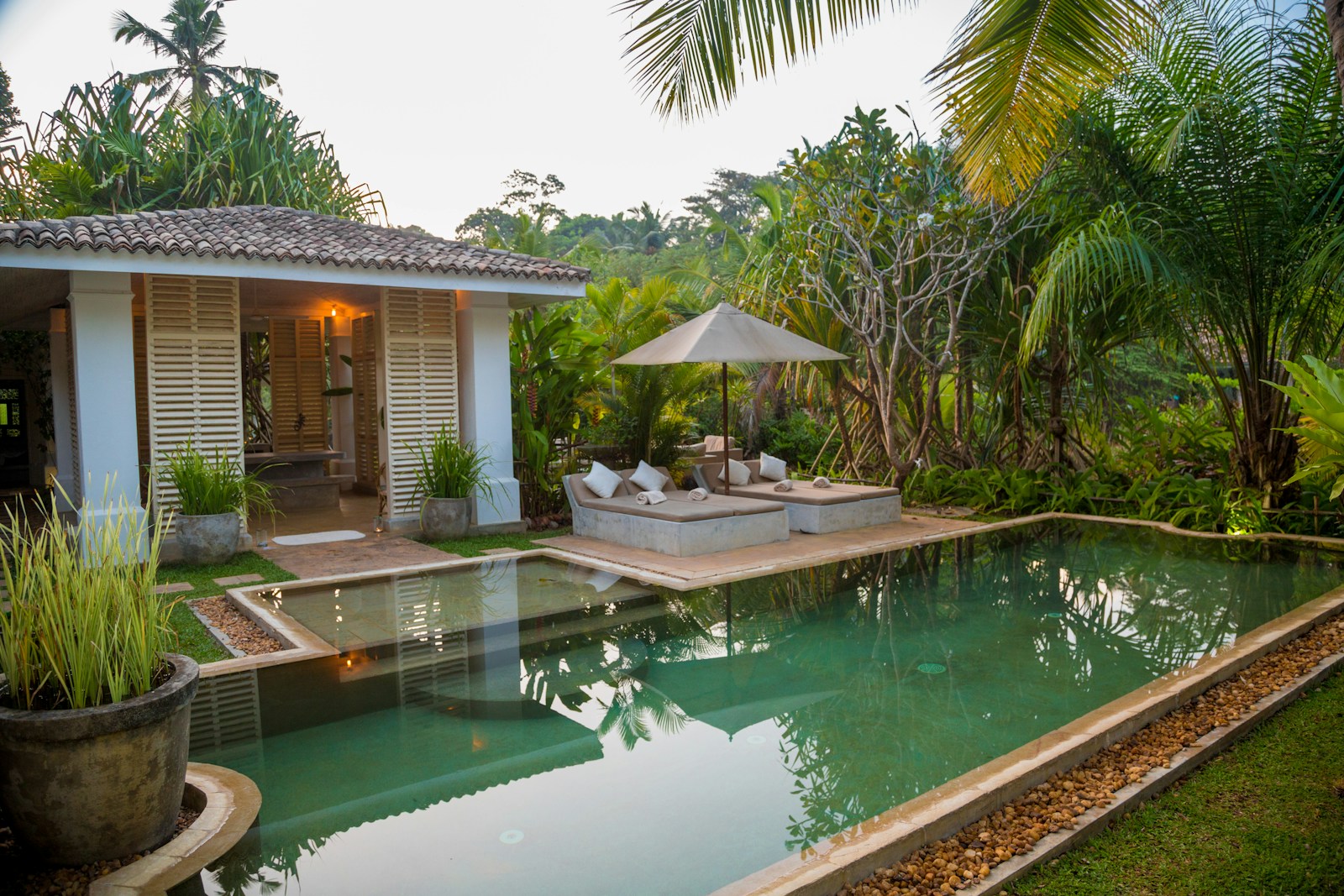
Picture, for a moment, the moment you arrive at a villa you booked six months ago. The drive in from the airport, the tentative second-guess about the address, the gate, the long path past the cypresses, the front door swinging open. Inside that door is either the trip you imagined or a slow-motion realisation that you got it wrong. Either the kitchen has the equipment to actually cook in or the photograph of the kitchen lied. Either the bed is the bed you hoped for or it is the kind of bed that turns the week into a back problem. The villa rental at the high end is not the villa rental most travellers think it is; it is a different category of trip, with a different set of expectations, and the gap between the marketing and the arrival is where almost all the trouble starts.
Plum Guide and Airbnb Luxe both promise to close that gap. Both vet their inventory, both publish photographs that hold up, both charge a premium over a standard Airbnb or Booking.com listing on the understanding that the premium buys quality control. The question you came here with is whether the quality control is worth what they each charge, and whether one platform does the job more rigorously than the other.
Travellers who land on this comparison have usually already done the basic math. A villa for a week at the high end runs from six thousand dollars at the entry tier to thirty thousand and beyond at the top, and the difference between a five-star week and a three-star one rarely shows up in the listing photos. It shows up in the bed linen, in the cleaning between guests, in whether the kitchen has a pan you would actually use, in whether the support team picks up when something goes wrong on the second night. That is the question this comparison comes down to, and here is the honest read.
The quick answer
- Choose Plum Guide if you value curation over selection, you dislike browsing through two hundred options to find one you like, and you prefer when someone has already done the editorial work for you.
- Choose Airbnb Luxe if you want maximum inventory, you are searching in a destination Plum Guide does not yet cover well, or you want the integration with the broader Airbnb ecosystem (experiences, longer stays, profile reviews carrying over).
- The honest tiebreaker: for European villa rentals, especially in Italy, Greece, France, and Portugal, Plum Guide is the better tool nine times out of ten. Outside Europe it is closer to a coin flip, and Airbnb Luxe often pulls ahead in the Caribbean and Mexico.
You are probably already leaning. Read on, and see whether the rest of this article confirms it.
The case for Plum Guide
What it actually does
Plum Guide is a London-based platform launched in 2016 with a single editorial premise: vet every property in person, reject most of them, and publish only the survivors. The company claims to reject roughly ninety-seven percent of submissions, and the total inventory is around three thousand properties globally, weighted heavily toward the Mediterranean (Italy, Greece, France, Portugal, Spain), with growing collections in the United States, the United Kingdom, and the Caribbean. The vetting checklist runs to several hundred items, covering everything from mattress quality to the angle of the morning light in the master bedroom, and the properties that make it through tend to share a recognisable register: design-forward, photographable, consistently cleaned and maintained, with a host or property manager who actually answers within an hour rather than two days.
Where it shines
Italy is where Plum Guide is at its strongest. The Lake Como, Tuscany, and Amalfi collections are the strongest curated villa inventory available online for those regions, and the Sicily and Puglia listings are growing in the same direction. Greece is similarly strong, particularly the Cyclades and the Peloponnese. The Smart Match tool, which surfaces properties based on a few preference questions, is genuinely better than Airbnb's filter-driven search and saves you an hour of browsing on the kind of evening when you only had an hour to spare. Customer service responds in hours rather than days, and the support team has actual product knowledge rather than reading from a script. The concierge can pre-stock the villa, book a chef, arrange transfers, and handle the small logistics that quietly turn a good villa week into a great one.
Where it falls short
The inventory is small enough that some destinations are thinly covered. The Caribbean has only a handful of listings outside the major islands, Asia is barely represented, and the United States is improving but still concentrated in a few markets (Hamptons, Aspen, the Hudson Valley, Los Angeles, Miami). For a region where you wanted thirty options, Plum Guide may show you eight, and if none of those eight match your dates, you are out of luck. The booking flow is slower than Airbnb's because each property is individually managed, and cancellation policies are stricter on average, weighted toward the host rather than the guest.
Browse Plum Guide's full collection or filter directly to your destination. The platform shows all available properties on one page rather than burying them in infinite scroll, which is one of the small reasons the search feels less exhausting than Airbnb's, and you can find yourself looking at the right twelve properties within ten minutes of arriving on the site.
The case for Airbnb Luxe
What it actually does
Airbnb Luxe launched in 2019 as the company's premium tier, integrating the existing Luxury Retreats inventory Airbnb had acquired in 2017. Properties must pass a three-hundred-point design and quality assessment to qualify for the Luxe label, and the total inventory is significantly larger than Plum Guide's, around nine thousand properties globally, spread across more than sixty countries. Every Luxe booking includes a free trip designer, a human assigned to handle requests, recommendations, and on-trip support. The platform sits inside the regular Airbnb app, so account history, payment methods, profile reviews, and customer support all carry over from a guest's standard Airbnb experience, which matters more than you would think when you are halfway through a booking and your dates change.
Where it shines
The Caribbean is the clearest win for Airbnb Luxe. Turks and Caicos, St Barts, Anguilla, Mustique, and the Mexican Pacific have strong Luxe inventory in categories Plum Guide barely touches. Larger group properties (eight, ten, twelve bedrooms) are easier to find on Luxe, particularly the multi-villa compounds common in the Caribbean and Mexico. The trip designer is genuinely useful for first-time luxury renters who want a human to confirm their choices, surface alternatives, and handle on-trip logistics without an additional fee, and the integration with Airbnb's broader ecosystem matters if you are also booking experiences, longer stays, or travelling on a profile with a strong review history.
Where it falls short
The Luxe filter is functionally a tag inside the regular Airbnb experience, and the feel is the same: long search results, wide quality variance, the constant low-grade fatigue of browsing too many options on a Sunday night when you wanted to be in bed. Some Luxe listings are simply expensive properties on Airbnb that have qualified for the badge rather than properties built for the high end, and the vetting bar, despite the three-hundred-point checklist, is less rigorous than Plum Guide's claim to reject ninety-seven percent of submissions. The gap is visible in the variance of properties at the same nightly rate. Customer service is Airbnb-standard, which means a chatbot first and a human only if you push, and the trip designer does not change this for issues outside the booking itself.
Side by side
A practical comparison you can scan, and you will probably find one side quietly winning more lines than the other.
For Italy and the Mediterranean: Plum Guide, by a clear margin.
For the Caribbean (Turks, St Barts, Anguilla): Airbnb Luxe has more inventory.
For Mexico (Punta Mita, Tulum, Los Cabos): Airbnb Luxe.
For curated style, when you do not want to browse: Plum Guide.
For maximum inventory in a single destination: Airbnb Luxe.
For cancellation flexibility: Airbnb Luxe.
For property condition reliability: Plum Guide.
For groups of ten or more: Airbnb Luxe.
For couples and small families: Plum Guide.
For first-time luxury renters: Plum Guide. The smaller selection is easier to navigate, and the editorial filter does the work for you.
For repeat luxury renters who already know what they want: Either works. Use Plum Guide for Europe and Luxe for the Caribbean.
Average price for a comparable four-bedroom villa in peak season: Plum Guide trends five to fifteen percent higher because the curation excludes the value plays.
Trip designer or concierge: Airbnb Luxe includes one free with every booking. Plum Guide charges separately for concierge services, though the booking team itself answers quickly without one.
Customer service responsiveness: Plum Guide leads. Airbnb Luxe is Airbnb-standard.
Mobile experience: Airbnb Luxe leads. Plum Guide's app is functional but less polished.
The third option most people miss
For some destinations, particularly in Italy and the south of France, the same villa appears on Plum Guide, on Airbnb Luxe, and on Booking.com, sometimes at different nightly rates because each platform takes different commission. This is not unusual for properties managed by professional rental agencies, who list across multiple channels because they have to. Booking.com tends to be the value channel for these listings because the commission structure is lower, though the curation and the support are weaker than either Plum Guide or Luxe.
When you find a villa you like on Plum Guide or Airbnb Luxe, search the property name on Booking.com before you commit, because about thirty percent of the time the same property appears there too, sometimes at a five to ten percent lower nightly rate. The trade-off is that you lose the platform's concierge support, and for travellers using a separate travel advisor, that may not matter. For a four-bedroom villa in peak season, the saving is often a thousand euros or more, and that is a thousand euros that buys a chef for two evenings.
What I would actually pick
If you forced me to choose just one, I would pick Plum Guide for European villa rentals nine times out of ten, and the reasons are practical rather than romantic, though there is some romance in them too.
The first reason is that the smaller inventory is the feature, not the bug. The single best villa for your dates and your party is somewhere in a haystack of two hundred listings on Airbnb Luxe, and the work of finding it is genuine work, the kind that turns a Sunday afternoon into a low-grade headache. Plum Guide has done that work for you. The eight properties they show you for your week in Tuscany are not the only eight; they are the eight that survived the filter, and that filter is worth the platform fee on its own.
The second is that the support is meaningfully better. The questions that come up before a villa booking (does the kitchen have a real oven, is the path to the pool safe for a six-year-old, will the host accept a same-day check-in) get answered by a human within an hour at Plum Guide, while the same questions go to a chatbot at Airbnb Luxe and bounce around for a day before reaching a person who will then ask the host. On a multi-thousand-dollar booking, the difference quietly matters more than you think it will.
The third, and this is the quiet one, is that the properties on Plum Guide are more consistently cleaned and maintained between guests. Airbnb Luxe properties vary, and the variance is not large, but it is enough that on Luxe I would always book a property with at least twenty reviews, while on Plum Guide I am comfortable booking a property with three.
The fourth is that the photographs and descriptions on Plum Guide match the property more reliably. The vetting process includes the photography itself, which means the picture you see on the listing is the picture you get when you walk through the door. On Airbnb Luxe the photography is host-supplied within guidelines, and even at the high end the gap between marketing and arrival is occasionally noticeable, which is not the gap you want to be standing in after an eight-hour flight.
The one out of ten when I would choose Airbnb Luxe is when the destination is the Caribbean, Mexico, or a US market Plum Guide has not yet covered well. There the inventory advantage is decisive, and the trip designer is the kind of small, free thing that makes the booking process feel held rather than self-serve.
Practical notes
Booking lead time at the high end runs eight to twelve months for July and August in Europe, four to six months for the shoulder seasons, and three to four months for the Caribbean during the December-to-April window. Last-minute bookings exist on both platforms but the inventory is the leftover, not the best. Start your search now and you will have options; wait two months and you will be choosing among the leftovers.
Insurance matters. A villa booking is a meaningful financial commitment, and most homeowner travel insurance policies do not cover villa cancellations adequately. Look at trip insurance specifically for the booking, ideally one that covers cancel-for-any-reason at the high end.
The concierge question is worth thinking about before you book. If you already work with a travel advisor, neither platform's concierge is necessary; advisors access both Plum Guide and Airbnb Luxe inventory and often have access to additional off-market properties through agency relationships. For travellers without an advisor, Airbnb Luxe's free trip designer is a real benefit, and Plum Guide's paid concierge is worth its fee for groups and for first-time renters who want to be looked after.
The deposit norm. Both platforms require fifty percent at booking and the balance sixty days before arrival, though individual hosts can deviate. A separate damage deposit, typically five hundred to two thousand euros, is held against the credit card and released after departure.
Both platforms are doing real work at the high end of vacation rental, and both are doing it better than the standard channels. Plum Guide is doing it more rigorously, on a smaller footprint, with stronger support. Airbnb Luxe is doing it at scale, across more destinations, with a smoother mobile experience. The right answer depends on what you value more, and on where you are going. Picture your trip, picture the moment of arrival, and pick the platform that gets you to that moment with the smallest gap between the photograph and the door.
The route.style travel notebook
Our running list of the villas, hotels, and small experiences worth booking, organized by destination. PDF, monthly update.
Get the notebook →